
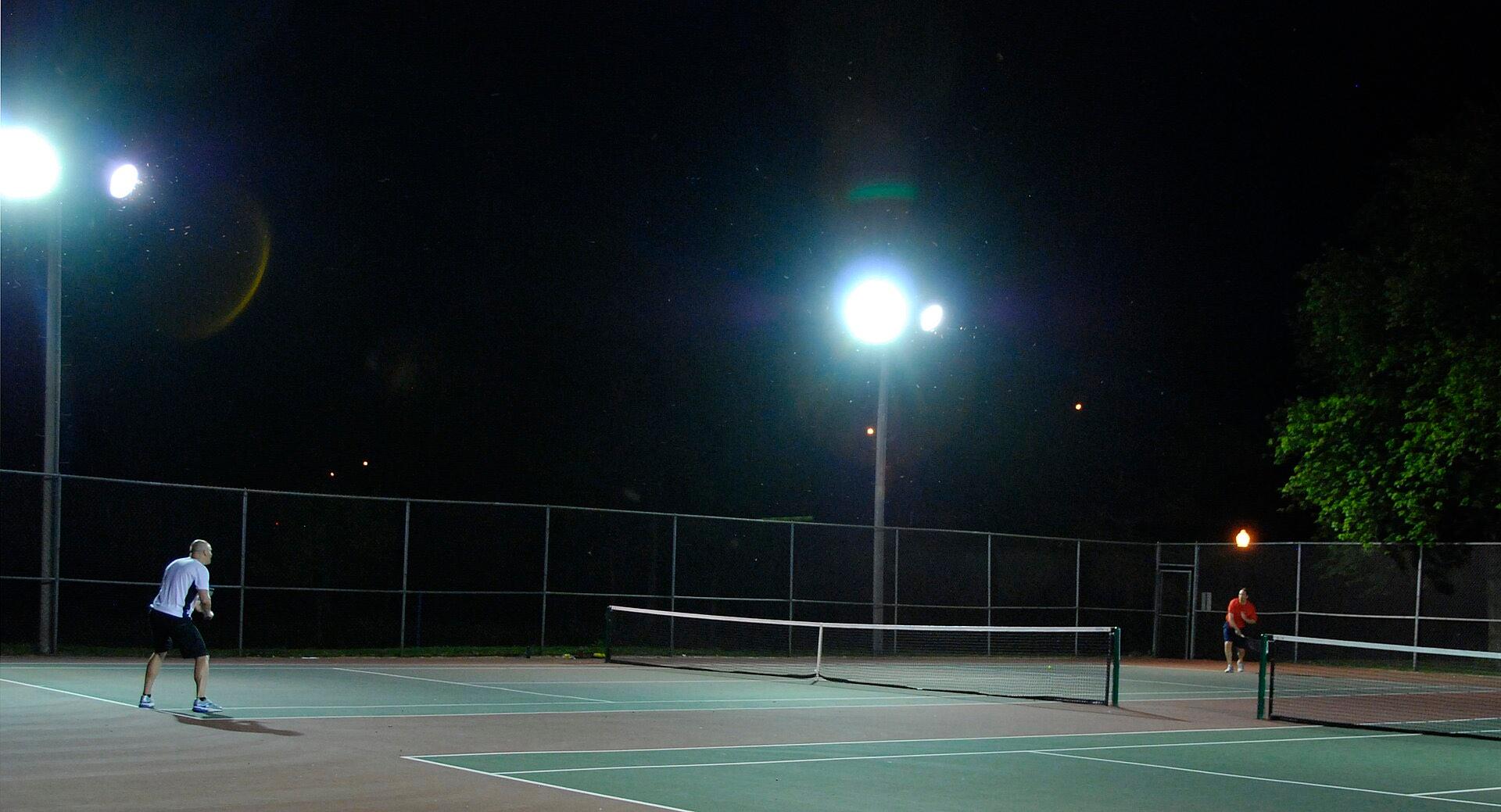
Tour level.From home.
Tour-level coaching without moving to an academy.
Next block 11 January4 of 10 places left
Two options. Neither is a plan.
The academy
€40,000–60,000
a year, roughly
Away from home and school. Mostly group hours.
Local coaching alone
No plan
often
Week-to-week lessons. No written plan, no film.
What we do instead
Stay home. Keep your coach. Add a tour-level plan.
A note from us
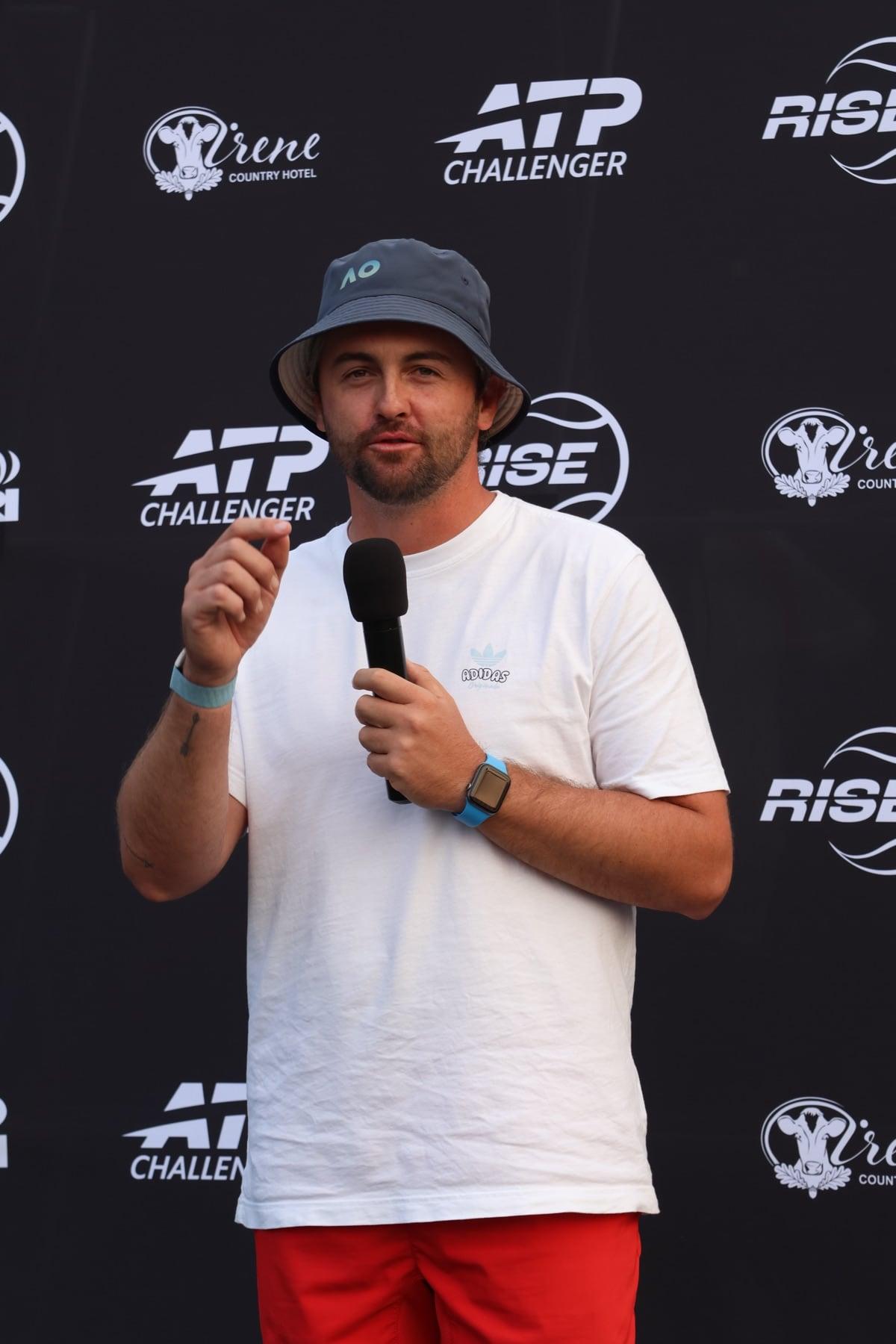
Cobus
Germany
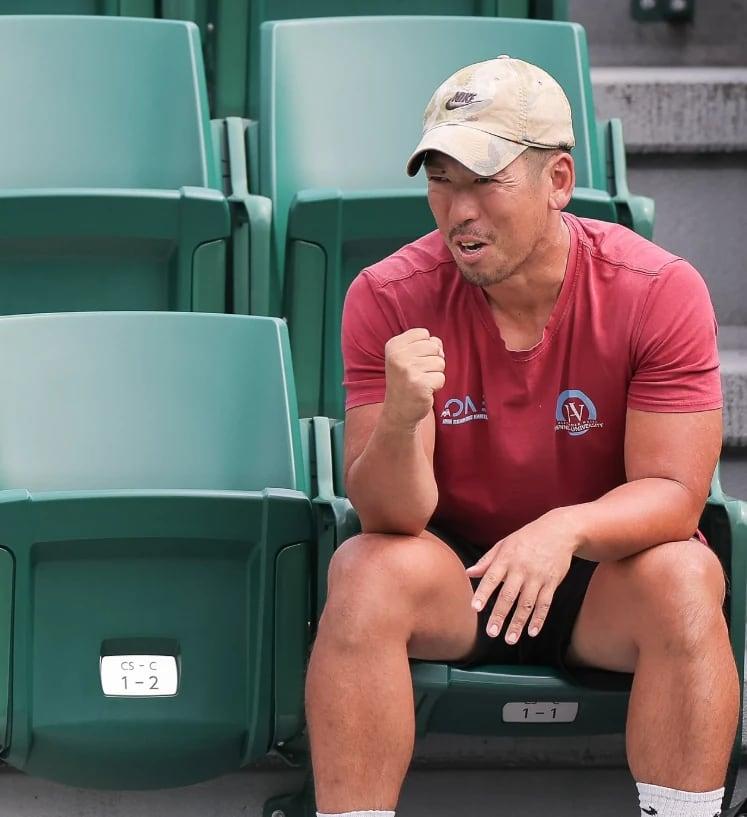
Kenta
India
We’re Cobus and Kenta, two touring coaches. One of us is based in Germany, the other in India.
We don’t think a good player should have to leave home to get a proper plan. So we write one for you, watch your film every week and tell you straight what we see. You keep your coach, your school and your own bed.
Cobus & Kenta
A straight answer
We tell you what we see, including when it isn’t what you hoped.
Within 48 hours
Every video you send gets written feedback from us.
With your coach
We brief your local coach and work alongside them.
Draft wording, for Cobus and Kenta to approve

70%
Tennis is a game of errors
About 70% of points in the men’s draw at the 2015 Australian Open ended in errors.
Source: Craig O’Shannessy, Brain Game Tennis analysis.
So we cut your wrong errors, and teach you to force theirs.
8 ways to force an error
Select one to see it on the court.
We start with depth and consistency. Always.
Depth
PriorityLand the ball near the baseline. The opponent hits from further back, with less time and a shorter swing.
5 game situations
Tell us where you lose points. We start there.
Serve +1
Serving
- What it is
- Your serve and the shot that follows it.
- Objective
- Start the point on your terms and play the second shot from a strong position.
- What we train
- Serve targets, a reliable second serve and a planned first ball after it.
Return +1
Returning
- What it is
- The return and your next ball.
- Objective
- Take away the server’s advantage. Deep through the middle first, then build.
- What we train
- Return position, a compact swing and where to send the ball after the return.
Baseline
Rallying
- What it is
- Both players at the back of the court.
- Objective
- Win the exchange with depth and consistency before reaching for more.
- What we train
- Cross-court tolerance, depth targets and when to change direction.
To the net
Approaching
- What it is
- You move forward to finish at the net.
- Objective
- Come in behind the right ball and close the point in one or two volleys.
- What we train
- Which ball to approach on, where to stand and the first volley.
Opponent at the net
Defending
- What it is
- The opponent has come forward and you have to answer.
- Objective
- Make them play a difficult volley, then pass or lob on the next ball.
- What we train
- Low passing shots, the lob and choosing between one ball and two.
The 12-week cycle
Four phases, three weeks each.
Block A · Weeks 1–6
Build strokes that hold up, then learn where to send them.
Block B · Weeks 7–12
Keep the game together under pressure and under fatigue.
Technical · Block A · Weeks 1–3
Strokes that repeat. We check each of the nine shots, match the grip to the player and build volume.
Nine shots, all maintained
- First serve
- Second serve
- Return
- Forehand
- Backhand
- Volley
- Overhead
- Approach
- Footwork
How a block works
On your court, with your coach.
Week 0
You send us video. We watch it, talk it through with you for 60–90 minutes and write your plan.
3 ways in
One-off
Assessment
from€190
- Video review of match and practice footage
- Written diagnosis
- Error profile across the 8 ways to force an error
- 30-minute call
6 weeks
6-week Development Block
from€1,200
- Kick-off call (60–90 minutes)
- Written plan for the six weeks
- Drills set in the portal
- Weekly video feedback
12 weeks
The full method
12-week Full Cycle
from€2,200
- Everything in Block A and Block B
- Tournament calendar for the cycle
- Parent session
- One continuous plan across all four phases
Learn to lose points well
Even the best lose nearly half their points. We train what happens next.
55%
The world No. 1 wins about 55% of points over a season.
Source: Craig O’Shannessy, Brain Game Tennis.
Who you’ll work with
Cobus
Germany · CET
TODO: confirm credentials
Kenta
India · IST
TODO: confirm credentials
Photo: portrait of the mental performance partner (only with written permission)
partner-mental-performance.jpg · 4/5
Mental performance partner
TODO: name and permission
Evidence, not opinions
You don’t have to take our word for it. Every block ends with a before-and-after report, built from your film and from SwingVision and OptiSwing data.
Error profile
SAMPLE
Demo Player · Block A · weeks 1–6
- ConsistencyConsistency: before 58, after 68.
- DirectionDirection: before 62, after 66.
- DepthDepth: before 41, after 57.
- HeightHeight: before 55, after 60.
- SpinSpin: before 64, after 66.
- PowerPower: before 70, after 70.
- Court positionCourt position: before 45, after 52.
- TimeTime: before 48, after 55.
Thin bar: week 1Thick bar: week 6◆ Priority
Case study coming after pilot
Before you apply
We are in a different time zone. Does that work?
Yes. One of us is on Central European Time and the other on India Standard Time, so most of Europe, the Middle East and Asia are covered in normal hours. Feedback is written, so it never depends on being awake at the same time.
Do we need a local coach?
It helps a great deal. The local coach runs the drills and receives a short brief from us for each block. A reliable hitting partner can work for older players. We will say honestly if the set-up is not enough.
What do we need for filming?
A phone, a fence mount or tripod and a view from behind the baseline. We send a one-page filming guide after you are accepted.
How does it work for players under 18?
A parent or guardian applies with the player, gives consent and joins the kick-off call. Video is used for coaching only.
What is the refund policy?
The terms are being finalised and will be given to you in writing before any payment.
What happens if the player is injured?
Tell us straight away. We adjust the plan around what the player can safely do, or pause the block until they are cleared to train.
Which languages do you work in?
English. Other languages to be confirmed.
How many places are there?
Ten per block. We keep the number small so that every video gets a proper answer.